Genie 4: A World Model You Can Steer While It Runs
Create a scene, enter it, then change its weather, characters or next event. The important shift is from producing footage to sustaining a simulation you can interrupt.
A generated video has a beginning and an end. An interactive world needs a loop: someone moves or gives an instruction, and the system generates what follows. DeepMind presents Genie 4 in that loop. Its recordings show keyboard navigation, camera control and text instructions that alter a running scene, such as changing the weather or adding a person.

From generating frames to maintaining a world
DeepMind groups the update into four advances: steering a scene in real time, more realistic people and physical motion, sound generated together with the world, and complex events guided by Gemini models. The first two shape the immediate experience. The latter two try to keep events coherent as time passes.
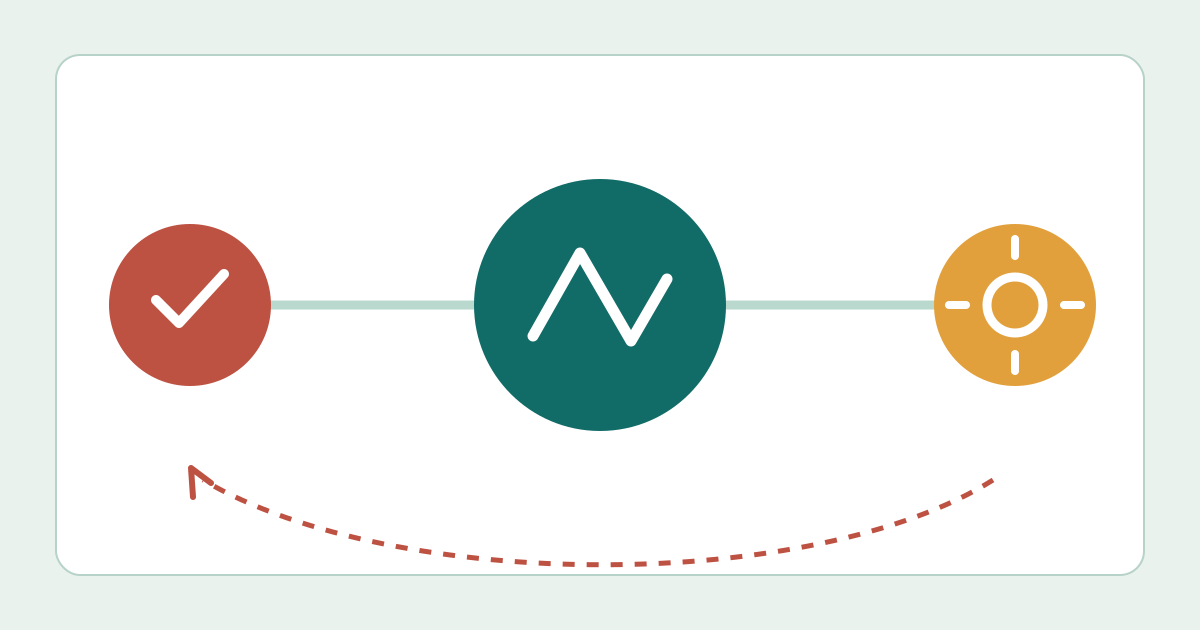
The feedback loop matters more than any one visual effect. DeepMind says Gemini 3.8 Flash observes Genie 4's incoming frames, checks whether a step worked and adapts the plan. Another demonstration uses Gemini 4 Argon to break a checkers task for a humanoid robot into instructions that steer Genie 4 as the simulation runs. The proposed division of labor is clear: one model plans and checks events; another renders a world that can be seen, heard and acted upon.
An explorable draft, for now
Early testers are exploring uses rather than receiving a finished game engine or engineering simulator. Filmmakers can try scenes as live previsualization. Photojournalists are testing ways to explore environments based on archival photographs. Game teams can probe visual styles and interaction concepts before writing engine code. In each case, a quickly explorable draft can help people ask better questions and compare directions. It should not be treated as a verified historical record or a faithful physical forecast.
Robotics research has a different incentive: one task could be practiced across many changing environments. But attractive footage is not proof of correct dynamics. Training and safety evaluation would require checking action outcomes, spatial relationships and state consistency over time against results in the physical world.
Where the preview still needs proof
DeepMind names the limits explicitly. Visual details and object permanence may drift during longer sessions, after several complex prompt edits or while traveling through a scene. Complex physical interactions, audio accuracy, legible text, spatial precision and long-term consistency remain active research areas. Those are precisely the properties a dependable simulator needs.
- Continuity: Does the same person, object or room remain recognizable after a turn, departure and return?
- Causality: Does changing one condition alter what happens next in a predictable way?
- Repeatability: Can repeated runs of the same task produce measurable success rates and failure patterns?
Genie 4 is currently a research preview for trusted testers. DeepMind says access is coming to Google AI Ultra subscribers through Project Genie and to early partners in the Gemini API and Google AI Studio. That is a rollout plan, not general availability today. The company also says generated video and audio will carry SynthID watermarks.
Genie 4 matters because instruction, action and feedback are beginning to share one perceptible world. Whether it becomes a useful creative tool or training environment depends on how well that loop survives longer and more demanding tasks.