VerifiedSourceDoorDash Engineering Blog07-14 · 14 min read⚑ Company PR · read with that in mind
Members only
Full article as Markdown — paste into Obsidian / Notion
↓ Article body below · each piece has its own look
Deep Dive · XiaoHu Explains
How DoorDash Built a Great AI Shopping Assistant: It's Not Just the Model — It's Tools and Memory That Make It Work
After the memory system launched, grocery checkout conversion rose roughly 24%, and automated evals scaled daily eval volume from 1 human review to 2,000+ runs.
⚑ Stance notice: This piece draws on DoorDash's engineering posts and public remarks from co-founder Andy Fang. The conversion and evaluation figures are DoorDash's own reported results, not independently audited; the seven-day window applies to the memory experiment, not every figure here.
1Launch Update
What DoorDash Just Shipped
DoorDash published three engineering posts in June 2026 on Ask DoorDash: an overview on June 11, a memory deep dive on June 18, and an evaluation deep dive on June 30. Together they describe the runtime, personalization, and the evaluation framework behind the early iOS rollout.
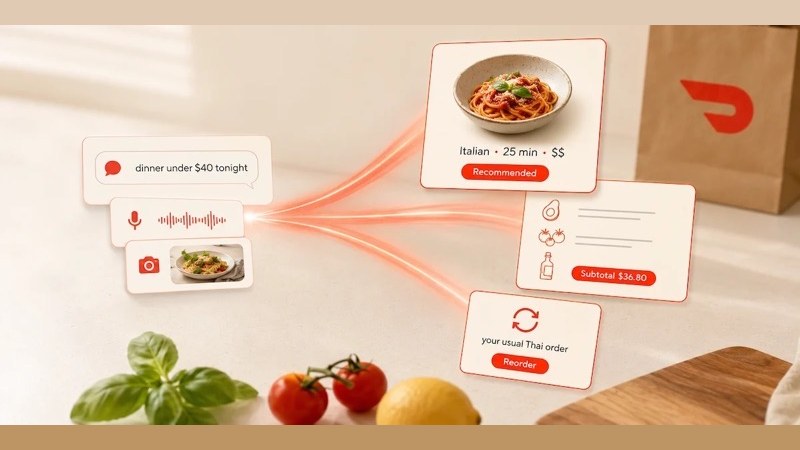
Describe what you want to eat or buy in a single sentence, and the AI searches restaurants, plans meals, and builds your cart — now in gradual rollout on iOS in parts of the US.
◆
The hard numbers: the eval team scaled daily quality evaluation from roughly 1 piece of employee human feedback to 2,000+ automated evals a day; a full regression test went from 6 hours of manual work down to 20 minutes.
Right now only two scenarios are live: restaurant search and grocery shopping — Android and web aren't there yet. Early data shows roughly 70% of messages are discovery-type requests, like "ramen nearby," "what should I eat tonight," or "how do I shop for vegetarian dinners this week." Most users go back and forth several times within the same conversation, tweaking as they go, rather than asking once and leaving. DoorDash also notes that the most common production failure mode right now is "facts not matching up" — recommending a restaurant that's actually closed, quoting a price that doesn't match the shelf, or saying something got added to the cart when it actually didn't. The fix follows the same idea in every case: every factual statement the AI makes must come from an actual tool call to the real system data, not a guess based on context.